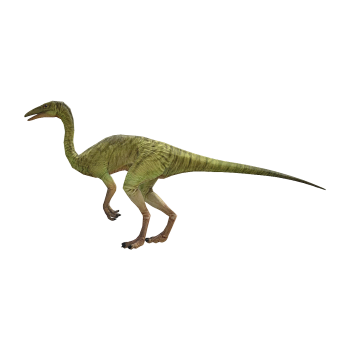
Maxillosaurus (3D animated model)

Maxillosaurus (3D animated model)
Mejanosaurus is a very small theropod dinosaur whose fossils were found in Europe and lived in the Late Jurassic. Until 1990, Maxillosaurus was the smallest theropod dinosaur. According to the current knowledge system, the class of mejosaurus to which mejosaurus belongs is a relatively primitive one in the class of virtual bones, and their kinship is far less close than that of Velociraptor, Deinonychus and birds. But for a long time in the past, mejosaurus was considered a close relative of Archaeopteryx, and led to the theory of the origin of avian dinosaurs.
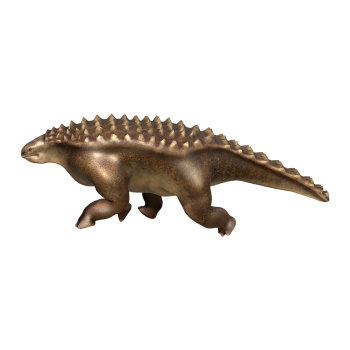
Nodular Dragon (3D animated model)

Nodular Dragon (3D animated model)
Nodosaurus (scientific name: Nodosaurus) is a herbivorous dinosaur of the ornithophorus suborder Nodosaurus family, which lived from the Jurassic to the Cretaceous. Its back is arched, its body is rounded, its head is small, its limbs are stout, its body surface is covered with small and dense tumor-like bone plates, which are shaped like tank caterpillars, its body side has nail-like protrusions, its shoulder and neck have external convex spines, and its tail end has no tail hammer. Nodules are mainly distributed in North America and Europe, and fossils are found in Canada, Wyoming and other places in the United States. Some species survived to the late Cretaceous, China's Henan, Zhejiang and other places have also been found nodular dragon fossils.
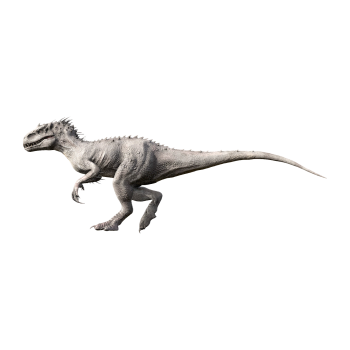
Tyrannosaurus Rex (3D animated model)
Tyrannosaurus Rex (3D animated model)

Tyrannosaurus rex belongs to the genus Tyrannosaurus, a type species of the genus, which was described and named in 1905 by Henry Osborne, an American paleontologist and academician of the American Academy of Arts and Sciences. If you refer to the translation format of other dinosaur species names, it would be more appropriate to translate its species name as "Tyrannosaurus rex. Late Cretaceous body length: 10-13 meters weight: 7.5 tons to 10 tons.
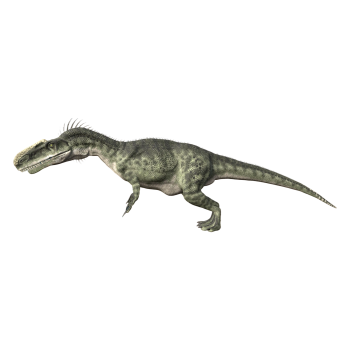
Single-Ridge Dragon (3D animation model)
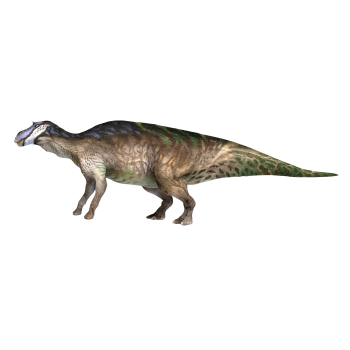
Single-Ridge Dragon (3D animation model)

Monosaurus is a species of dinosaur belonging to the superfamily Billosauridae. Also known as Monostosaurus, this type of dinosaur had a single crown on the top of the head that extended from the top of the head to the top of the nose. The role of the crown is likely to be to attract the opposite sex in the process of courtship. The body structure is well-proportioned and has very high flexibility when moving quickly. The hind limbs of the single-spine dragon are strong and powerful and can run quickly. Although the forelimbs are short, they have sharp fingers and claws that can assist in hunting.
Mother Dragon (3D animated model)

Mother Dragon (3D animated model)
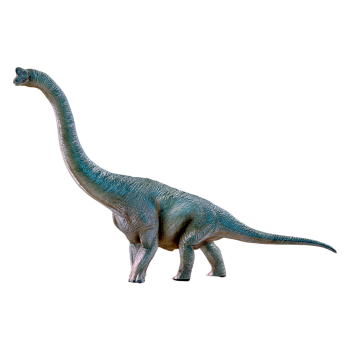
The English name of Cimu Long (maiasaura) means "good mother lizard". In 1979, in Montana, USA, scientists found a number of dinosaur nests, including the skeleton of a small dinosaur. and. As the dragon has the habit of living in groups and building nests in groups, it makes people's life habits of the dragon. The front legs of the mother dragon are shorter than the hind legs. They have long tails.
Brachiosaurus (3D animated model)

Brachiosaurus (3D animated model)
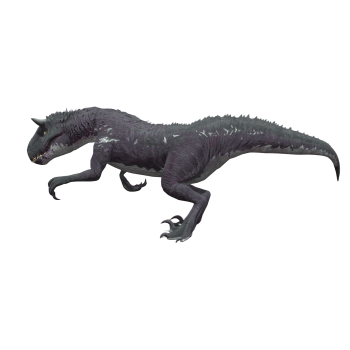
Brachiosaurus is a general term for the "Brachiosaurus" dinosaurs of the Jurassic period. The body length is 25 meters, the height is 15 meters, the weight is 30 tons, the tail is thick and short, the head is very small, the neck is very long, and the shape is similar to that of a giraffe. There are large claws on the inner side of the foreruns. The jaw is well developed, covered with 52 teeth up and down, and the edges of the teeth are sharp. The limbs are thick and strong. The nostrils are on top of the head. It is named for its long forelimbs. Brachiosaurus lived in North America in the late Jurassic and North Africa in the early Cretaceous. It inhabits grasslands full of ferns, cyraceds, and Equisetum. Gentle temperament, like social life. To feed on leaves and twigs. Often foraging together.
Carnivorous Beef Dragon (3D animated model)
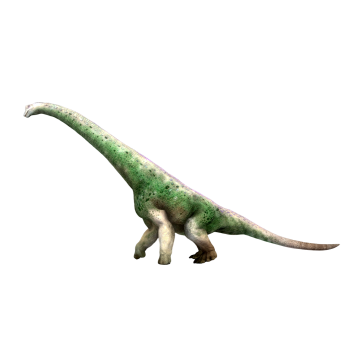
Carnivorous Beef Dragon (3D animated model)

Beef-eating dinosaur, a carnivorous dinosaur of the order sauroptera theropod. The head of the beef cow is short and thick, with wing-shaped sharp corners above the eyes, small and forward-facing eyes, winged vertebrae, short forelimbs, and rows of protruding scales on both sides of the back. The length is about the length of the connection of two cars. The forelimbs are short, the hind limbs are long and strong, the long spine has wing-like protrusions, and the long and strong tail helps it maintain its balance. Because of the two horns on the head, it looks like a "bull horn", so it was named a meat cattle dragon.
Long Neck Dragon (3D Animated Model)

Long Neck Dragon (3D Animated Model)
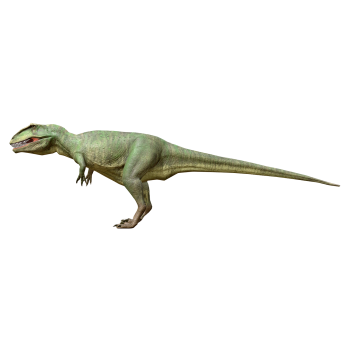
The long-necked dragon is a herbivorous lizard-rump dinosaur of the genus Brachiosaurus, which belongs to the chordates lizard class. Its typical body length is 25 meters, the forelimb is longer than the hind limb, the skull has a large hole to reduce weight, the brain capacity is about 300 cubic centimeters, and the tail has a large ridge to assist in balance. The species lived in East Africa in the late Jurassic period, with a daily eclipse of 1.5 tons of plants, larval clusters resisting natural enemies, and adult individuals living alone. The long-necked giant dragon was originally classified as Brachiosaurus. In 1988, Ge Paul listed it as a subgenus of brachiosaurus. In 2009, a study confirmed that it had differences in the proportion of dorsal vertebrae with high-chest brachiosaurus and established an independent genus.
Giant beast dragon (3D animation model)
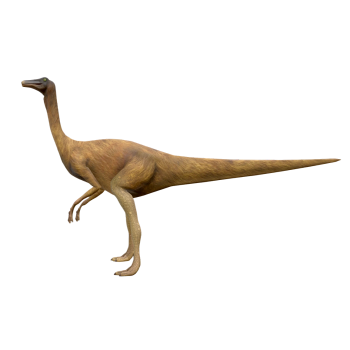
Giant beast dragon (3D animation model)

Monosaurus belongs to the family Shark Tooth. Monosaurus was born in Argentina in the middle of the Cretaceous period (the Sennoman order from 0.1 billion to 92 million years ago). It has a large and narrow mouth with a sharp but thin tooth, which is very similar to Shark Tooth. Some people think that the two dinosaurs may be the same kind of dinosaur. The main characteristics of the southern behemoth dragon are: a large mouth full of dagger-like teeth, a tall body, and a slightly protruding back spine.
Like a Chicken Dragon (3D animated model)
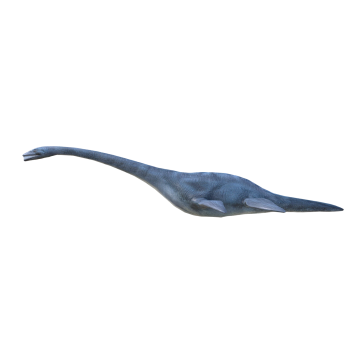
Like a Chicken Dragon (3D animated model)

The name "chicken-like dragon" means "similar to poultry". Paleontologists believe that chicken-like dragon may be the largest bird-like dragon, which looks very much like a bird. Of course, it's not a bird and can't fly, it's just a running chicken-like dragon that lived in the semi-desert arid region of the late Cretaceous period about 70 million years ago. Its shape is very much like today's large ostrich, but without feathers and wings, its eyes are born on both sides of the head, high above the position, wide field of vision. In the dinosaur family, like a chicken dragon can be regarded as a running master. The reason why it runs fast is due to its body structure. Like a chicken dragon, it is tall and can step far.
Flake Dragon (3D animated model)

Flake Dragon (3D animated model)
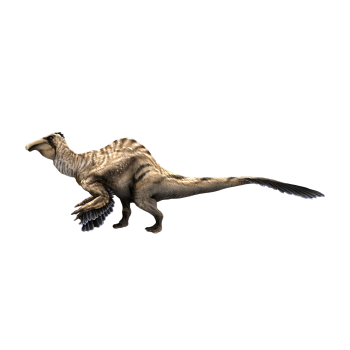
The lamellar dragon is a representative of the late plesiosaur class, with a small head disproportionate to the long neck. The flake dragon is huge, with a height of up to 14 meters and a weight of up to 7 tons. The strata are found in North America, and the living age is the late Cretaceous.
Horrified Dragon (3D animated model)

Horrified Dragon (3D animated model)
Dendrosaurus (scientific name: Deinocheirus) is a giant omnivorous dinosaur in the family Theropod. It belongs to one of the largest species in the order of ornithosaurus. The adult body length can reach 12 meters and the weight is about 9.3 tons. It is one of the largest theropod dinosaurs found in Asia and one of the largest theropod dinosaurs. This species has unique morphological characteristics: the forelimbs are up to 3 meters long, with 20-30cm hooked claws attached to the fingers; the back is raised to form a hump-like structure; the head is small and duckbill-shaped, and the lower jaw has a horny beak.
Da-style turon (3D animated model)

Da-style turon (3D animated model)
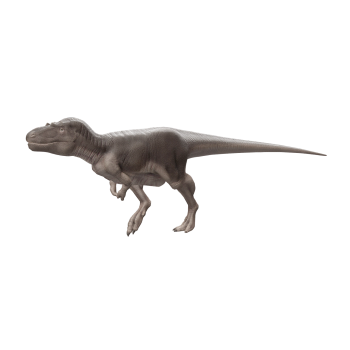
Da-style turosaurus (scientific name: Daspletosaurus), also known as Dasbrosaurus, is a large carnivorous dinosaur of Tyrannosauridae and Tyrannosauridae. The adult body length can reach 10 meters, the average weight is 4 tons, and the largest individual can exceed 6 tons. The skull is about 1.1 meters long and has more than 60 D-shaped anterior maxillary teeth. The proportion of forelimbs is relatively long in Tyrannosaurus, and the hind limbs are strong. According to the study of hodeshloron, its face may be covered with flat scales that are sensitive to touch. There are currently two valid species: the Robust Dasbrillon and the Horn's Fenosaurus. There are also unnamed specimens, such as the tentatively named Fenosaurus, which can weigh up to 7.5 tons.
Dakota raptor (3D animated model)

Dakota raptor (3D animated model)
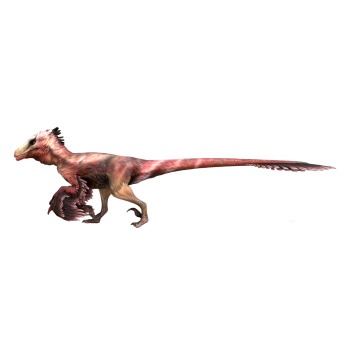
Dakota raptor (scientific name: Dakotaraptor) is a large theropod dinosaur of the genus Chiraceae Dakota raptor, belonging to the subfamily Chiraceae of the true chiraceae, which lived in the Maastricht stage of the Cretaceous 67 million to 65 million years ago. Its body length is about 5 meters, its weight is about 450 kilograms, and its femur length is 60 centimeters, making it one of the largest known types of Chiosaurus. Dakota raptor has an elongated tibia structure and a stem tumor of the ulnar feather, and the forelimb may cover the flight feathers. The model species is the Stardatraptor, found in the Hell Creek Formation, South Dakota, USA.
Giant Body Dragon (3D animated model)
Giant Body Dragon (3D animated model)

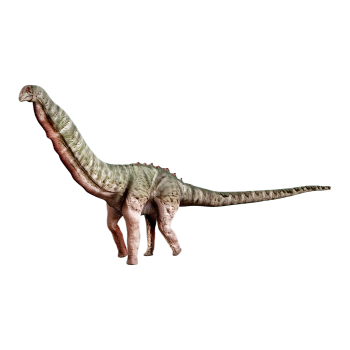
Megalosaurus is a sauropod dinosaur of the sauropod family and is considered one of the largest known dinosaurs. The model species is Mars giant dragon, which was originally classified as theropod by Yadagiri and Ayyasami in 1989 and changed to Titanosaurus by research in 2006. Its body length is about 30 meters and its estimated weight is 50-60 metric tons, but the 2020 study suggests that its tibia is actually a weathered femur, correcting the weight data and suggesting that its body size may not be very large. It has the characteristics of long neck, long tail and quadruped herbivorous, and is considered invalid due to incomplete fossil information.
Walker's Heavy Claw Dragon (3D Animated Model)
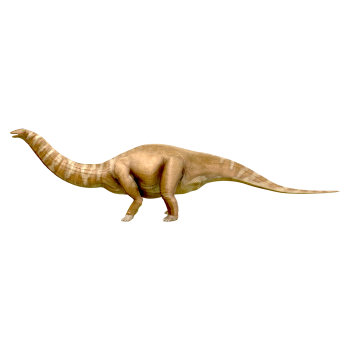
Walker's Heavy Claw Dragon (3D Animated Model)

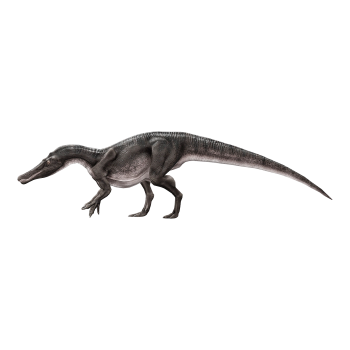
Walker's heavy-clawed dinosaur (scientific name: Baryonyx walkeri) was a theropod echinosaur of the Balemian order of the Early Cretaceous. The most notable feature of this species is that it has sickle-shaped claws of more than 30cm on its forelimbs. Its long crocodile-shaped skull and 96 conical teeth show a high degree of adaptation to fish. In 2022, the study confirmed that its bone density increased and it has the aquatic adaptation characteristics of underwater foraging. The name "walkeri" is in honor of William Walker, an amateur paleontologist who discovered the first complete fossil in the Oakley clay pit in Surrey, England, in 1983.
Bewitched Dragon (3D animated model)

Bewitched Dragon (3D animated model)
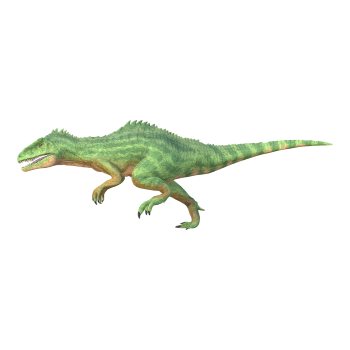
Confused dragons, the genus Confused dragons in the family Liang Longaceae, including Az Confused dragons (A. ajax) and Lu's Confused dragons (A. louisae). The confused dragon is characterized by a thick and long neck and a thin and long tail. Once confused with Apatosaurus, it has been shown that they are actually two different dinosaurs.
Allosaurus (3D animation model)

Allosaurus (3D animation model)
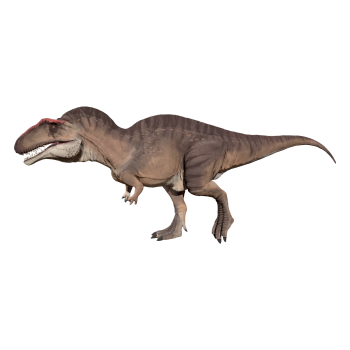
Allosaurus is one of the most famous large carnivorous dinosaurs, occupying the apex of the food chain in Late Jurassic terrestrial ecosystems; its type species, Allosaurus fragilis, was named by the great American paleontologist Othniel C. Marsh in the 20th century. Marsh described and named it in 1877. They are also the most abundant and widespread predators found in the Late Jurassic. Adult Allosaurus could reach lengths of up to 9 meters, with some specimens believed to have attained as much as 12 meters. Although not as large as Tyrannosaurus Rex's burly body, the allosaurus was more proportioned and had more developed forelimbs that made it more robust.
Allosaurus (3D animation model)

Allosaurus (3D animation model)
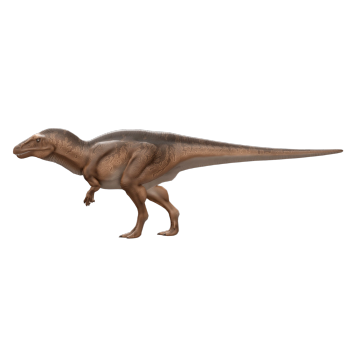
Carcharodontosaurus is a large carnivorous dinosaur discovered in North America, reaching lengths of up to 11 meters, and belonging to the Carcharodontosauridae within the Allosauroidea superfamily. Its fossils are primarily found in the U.S. states of Texas, Wyoming, and Oklahoma. Its dental fossils have also been discovered in Maryland, indicating that this apex predator was once widely distributed across the North American continent. The genus Acrocanthosaurus contains only one species, Acrocanthosaurus atokensis. The Allosaurus lived during the Aptian to Early Albian stages of the Early Cretaceous. Allosaurus was the largest predator in its ecosystem, preying primarily on ornithopods and massive sauropods.
Allosaurus (3D animation model)

Allosaurus (3D animation model)

Carcharodontosaurus is a large carnivorous dinosaur discovered in North America, reaching lengths of up to 11 meters, and belonging to the Carcharodontosauridae within the Allosauroidea superfamily. Its fossils are primarily found in the U.S. states of Texas, Wyoming, and Oklahoma. Its dental fossils have also been discovered in Maryland, indicating that this apex predator was once widely distributed across the North American continent. The genus Acrocanthosaurus contains only one species, Acrocanthosaurus atokensis. The Allosaurus lived during the Aptian to Early Albian stages of the Early Cretaceous. Allosaurus was the largest predator in its ecosystem, preying primarily on ornithopods and massive sauropods.
Haiba Dragon (3D animated model)

Haiba Dragon (3D animated model)
Haiba dragon (scientific name: Thalassomedon) is a marine reptile of plesiosauridae, named by Welles in 1943, which means "ruler in the sea". The body length of this species can reach 12 meters. The neck consists of 65 vertebrae, with a length of about 6 meters, accounting for 50% of the whole body. The skull is 47cm long, the teeth are 5cm long, and the flippers are about 1.5-2 meters long. The sea basilon survived 95 million years ago in North America in the late Cretaceous Norman order, and its fossils have been found in different parts of North America. The genus is closely related to the lamosaurus, and there are 6 specimens of different preservation conditions.
Halosaurus (3D animated model)

Halosaurus (3D animated model)
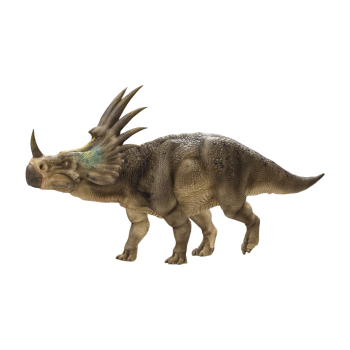
Stardosaurus (Styracosaurus), also known as shield-horned dinosaur, means "lizard with spikes (στυ ραξ)" in Greek. It is a genus of herbivorous horatosaurus dinosaurs and lived in the Cretaceous Campanidae, about 76.5 million to 75 million years ago.
Stegosaurus (3D animated model)

Stegosaurus (3D animated model)
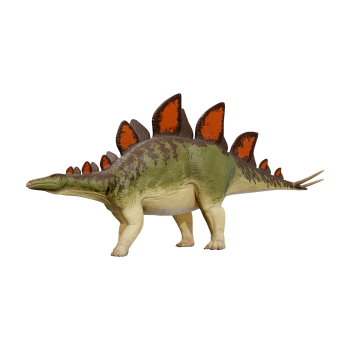
Stegosaurus is an animal of the genus Stegosaurus, also known as bone plate dragon. The head is small, and the front end of the mouth has a bird-like pointed beak. There are no teeth on the beak. The teeth are distributed on both sides of the mouth and are very small. The shape is strong, weighing up to 4 tons, with 5 toes on the forelegs and 3 toes on the hind legs. The front legs of the stegosaurus are slightly shorter, and the hind legs are longer and stronger. Stegosaurus is named for its large saber and pointed thorn on its tail.
Sword Horn Dragon (3D animated model)

Sword Horn Dragon (3D animated model)

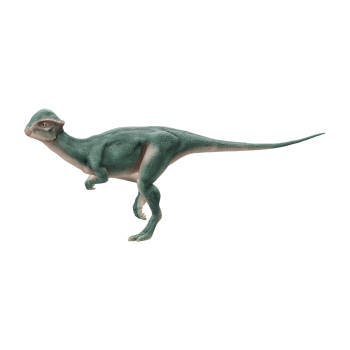
Swordtail, also known as Cocktail, is a genus of herbivorous dinosaur, living in North America in the Late Cretaceous, with a body length of about 2 meters. Its most prominent feature is the hemispherical thickening of the skull, composed of a number of small bones, covering the eyes and back of the neck, male skull thickness of up to 6cm. The genus was named by Lawrence Reibo in 1902. Swordhoratosaurus fossils are mainly distributed in Canada, using two-legged walking. There is controversy in the academic community about its thickening craniocerical function, which may be used for intrassic collisions or to ward off predators. Early studies have classified it as a close relative of the wounded tooth dragon. After the discovery of the skull in 1945, it was confirmed to belong to the thick head dragon.